

How Race Car Livery Design Helps Your Brand Stand Out
How Race Car Livery Design Works: From Concept to Race Track

The standout livery from Le Mans in 2025, the AWA Canadian Corvette. Counter-clockwise from top-left: Original 2D Concept layout, 3D Preview rendering, finished product on track at Circuit des 24 Heures du Mans.
Motorsport livery design is one of the most important elements of motorsport branding. A well-designed motorsport livery not only ensures your car is recognizable on track, but also maximizes sponsor visibility and creates team identity. Professional race car livery designers combine branding, spacial awareness, sponsor placement, and vehicle geometry to create graphics that work both visually and commercially.
This guide explains the race car livery design process used by professional motorsport designers.
Step 1: Understanding the Team and Sponsors
Every successful motorsport livery design starts with understanding the team’s requirements.
Key questions include:
What series is the car competing in? (This determines space requirements due to series required logos, number placement, position panels, etc.)
Who are the sponsors?
What colour(s), logo, and existing design elements define the team/sponsors and their brands?
What viewing angles are most important for broadcast/photos?
For example, cars in the IMSA SportsCar Championship require large sponsor areas because television coverage and trackside photography are major exposure channels.
Step 2: Vehicle Templates and 3D Models
Professional race car wrap design begins using accurate templates.
Designers typically work with highly-accurate:
2D vector templates
3D vehicle models
This ensures graphics align correctly across all parts of the vehicle for a cohesive look. Without accurate templates, wrap installers may struggle during production and installation.
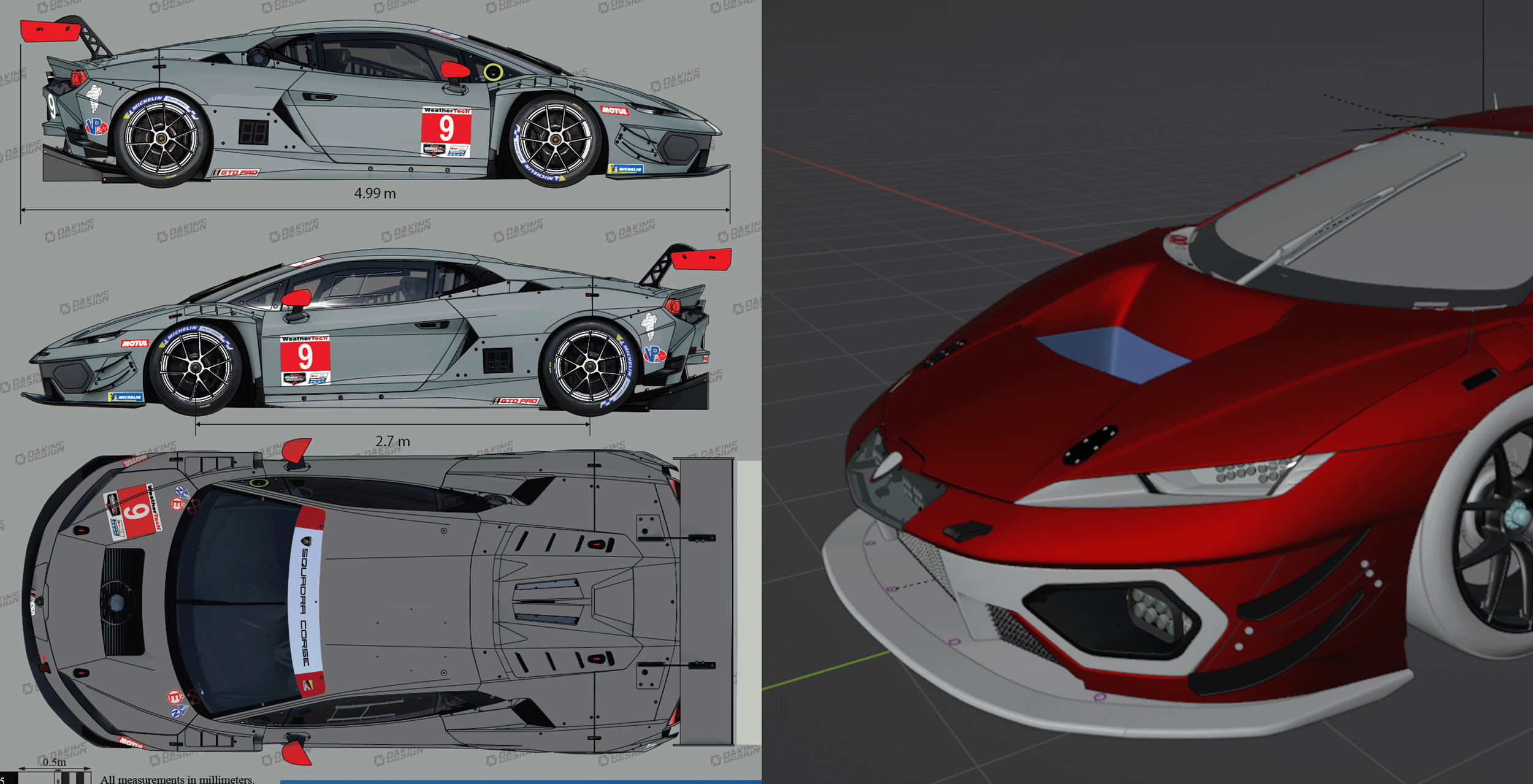
Left-to-right: Lamborghini Temerario GT3 2D Design Template, 3D Model
Step 3: Sponsor Placement Strategy
Sponsors are the financial backbone of racing teams.
A strong race car livery design prioritizes sponsor placement by:
placing primary sponsors on doors and hood
positioning secondary sponsors near wheel arches, front and rear bumpers, and/or along bottom of door/side skirt areas
ensuring logos remain readable at high speed using proper size, placement, and using contrasting colours
Designers must also consider camera angles used during race broadcasts.
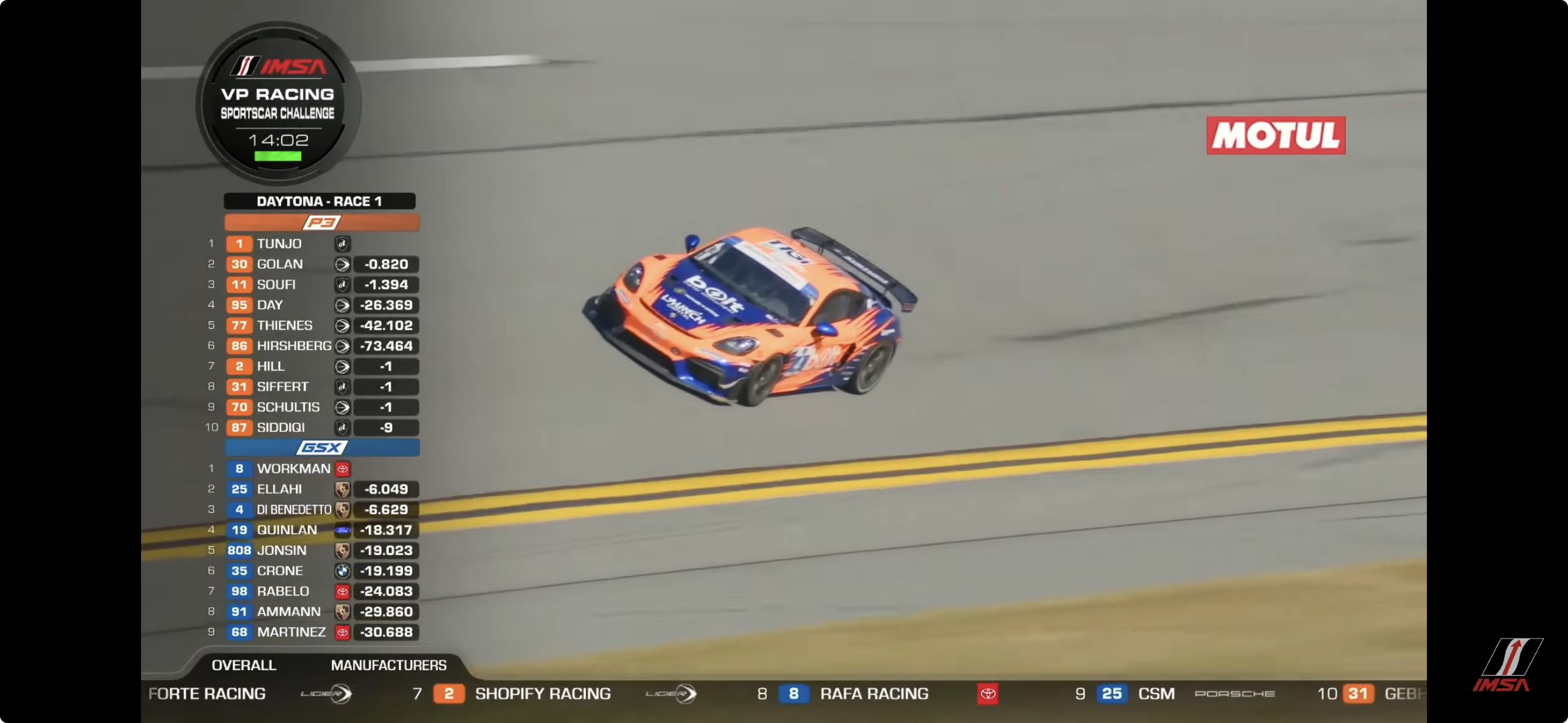
Large, high-contrast logos placed along the hood and roof area are key to get exposure during the IMSA broadcast on the high-banks of Daytona, even at lower resolution.
Step 4: Visual Identity and Style
Now the creative stage begins.
Designers develop visual elements like:
colour gradients
stripes
geometric patterns
aggressive shapes that emphasize speed
The goal is to create a motorsport livery that stands out and is easily readable at 200+ km/h.
Step 5: 3D Rendering and Visualization
Modern race car livery design studios use 3D renderings to preview the car.
3D renders allow teams to:
review sponsor placement
visualize the car under track lighting
share images with sponsors and media
This stage is crucial for final approval.
Step 6: Print and Wrap Production
Once approved, the design is prepared for vinyl wrap production and installation.
The final files include:
instructional 2D views of the final design including installation notes.
high-resolution, scaleable vector graphics and logos
cut lines
print-ready layers
Wrap installers then print, cut, and apply the vinyl graphics to the car body.
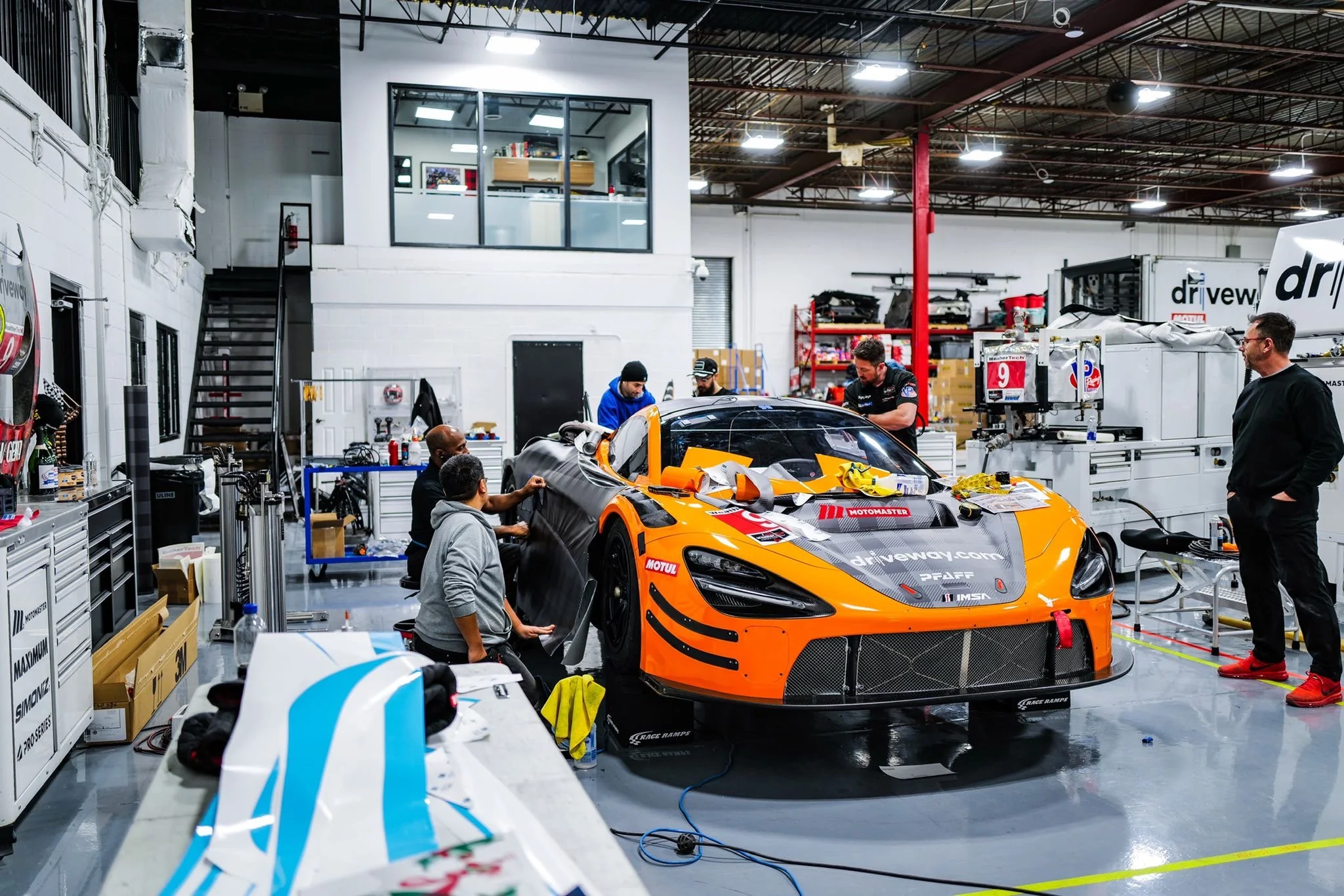
Livery Installation by C17 Media at Pfaff Motorsports. Photo: Laurance Yapp
